🏠 Buyer & Seller Resources

The Closing Process

A step-by-step breakdown of what happens between an accepted offer and final handshake — for both buyers and sellers, with no surprises.

🔑 Buyer Closing 🏠 Seller Closing ❓ FAQ
What Is Closing?

The Final Step to Ownership

Closing is the final legal step that transfers ownership of a home from the seller to the buyer. It involves signing documents, transferring funds, and recording the deed. Understanding every step — whether you’re buying or selling — helps you move through the process with confidence and no unexpected surprises.

30–45
Days avg. buyer closing
30–60
Days avg. seller closing
2–5%
Typical closing costs
~12
Steps from offer to keys
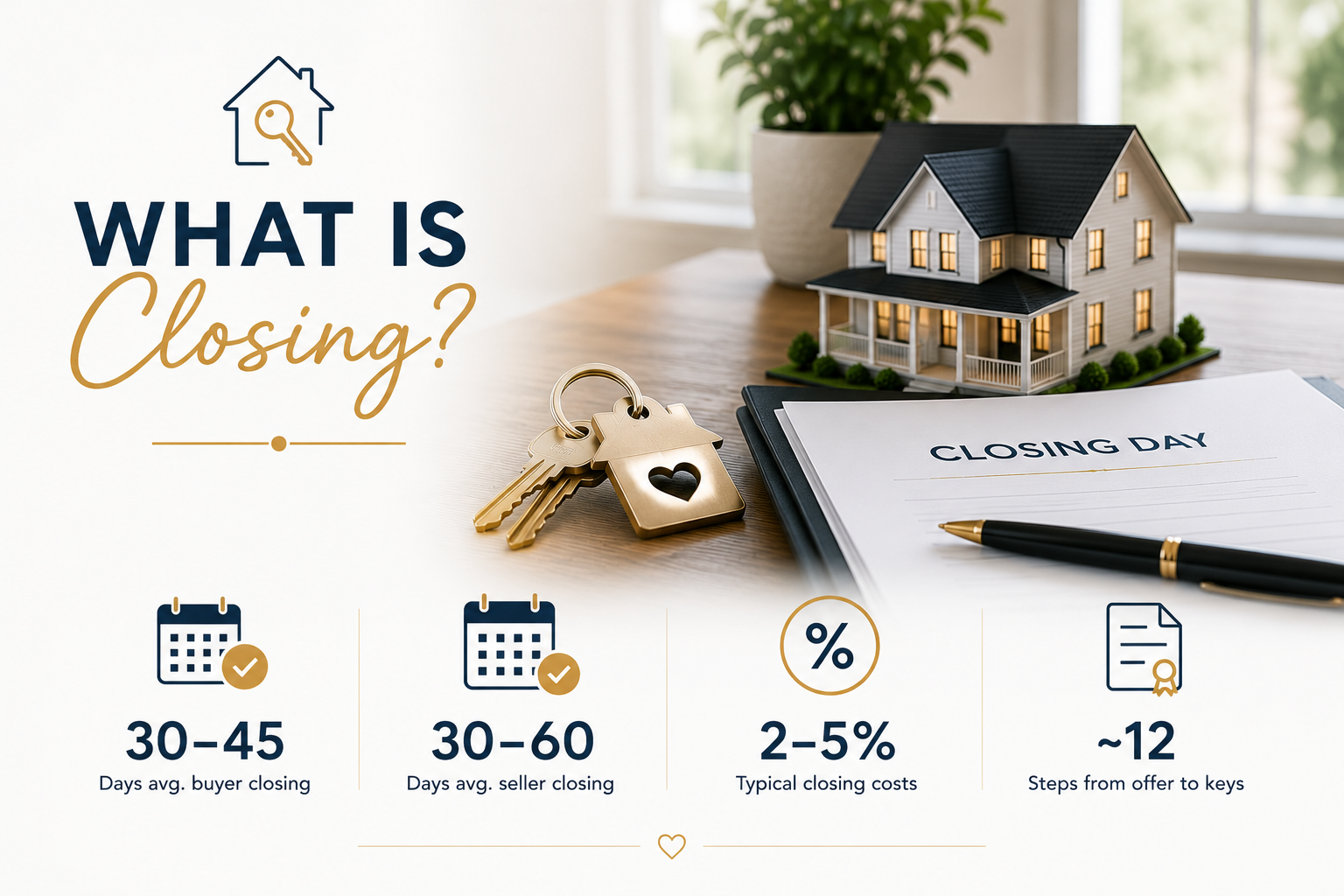
What is Closing — Overview of the home closing process

Buyer Closing Step by Step

Once your offer is accepted, the clock starts. Here is exactly what happens between that exciting moment and the day you get your keys.

Buyer Closing Process — Step by step from offer to keys

From Accepted Offer to Keys in Hand

The buyer closing process typically involves six main phases. Your agent and lender will guide you through each one, but knowing what to expect helps you respond quickly and avoid delays.

Stay responsive — delays often come from missing documents
Avoid new credit, large purchases, or job changes before closing
Keep homeowners insurance confirmed and lender documents ready
Review your Closing Disclosure at least 3 days before closing day
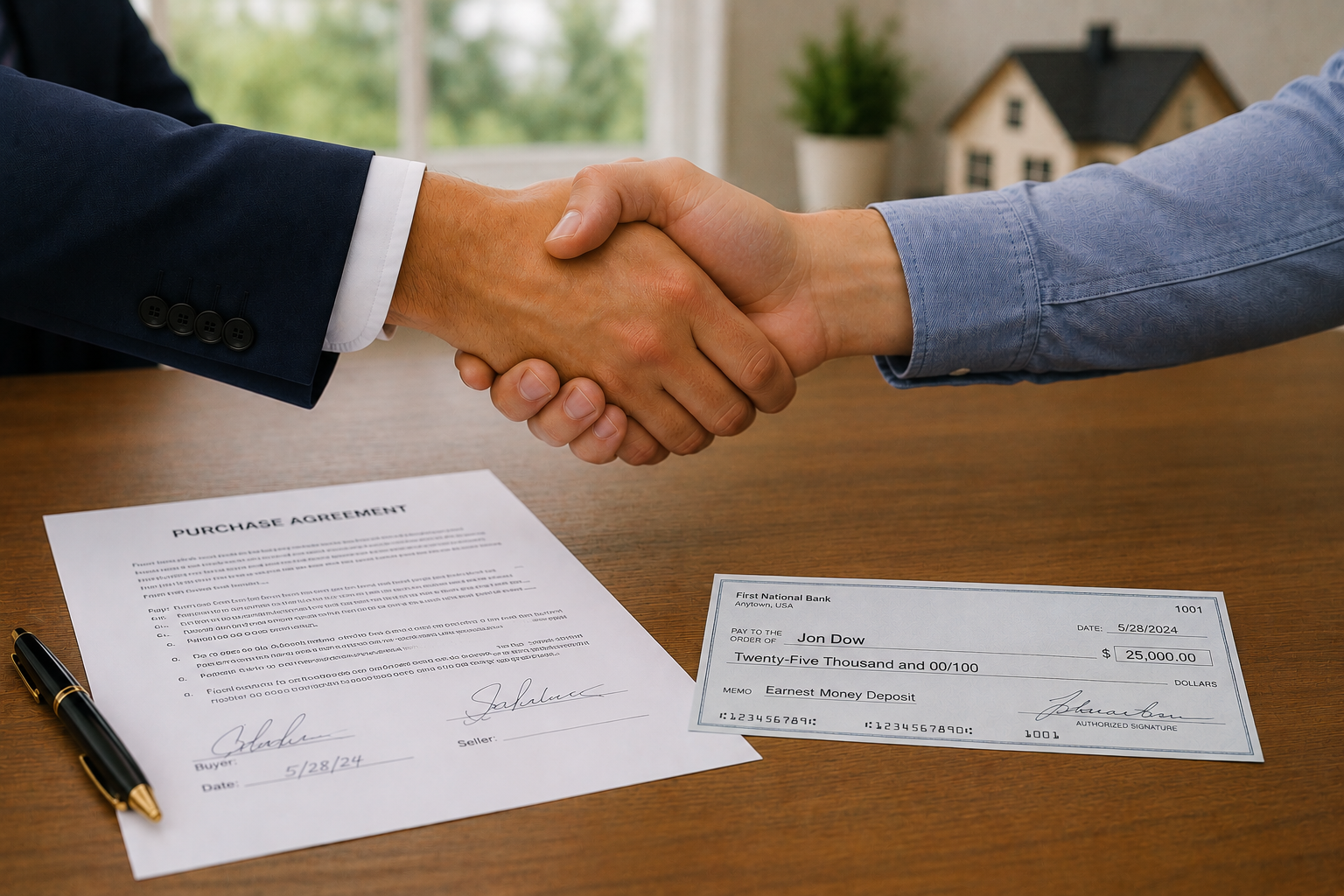
Earnest money deposit — buyer signs purchase agreement and provides good-faith check
01

Earnest Money Deposit

Within 1–3 days of acceptance, you deposit earnest money as a good-faith payment showing your serious intent.

  • Typically 1%–3% of the purchase price
  • Applied toward your down payment or closing costs
  • May be forfeited if you back out without a valid contingency
💡 Keep your earnest money in the escrow account — never wire directly to a seller.
Licensed home inspector evaluating HVAC system and property condition
02

Home Inspection

A licensed inspector evaluates the property’s condition. This is your opportunity to uncover issues before committing.

  • General home, roof, HVAC, plumbing, electrical inspections
  • Optional: radon, mold, sewer line, pest, pool, structural
  • Negotiate repairs or credits based on findings
  • You may cancel the contract if issues are significant
Appraiser completing property appraisal report in front of the home
03

Appraisal

Your lender orders an independent appraisal to confirm the home’s value supports the loan amount.

  • If the home appraises at or above purchase price — proceed
  • If it comes in low — renegotiate, cover the gap, or cancel
  • VA and FHA loans have their own appraisal requirements
💡 An appraisal protects both you and the lender from overpaying.
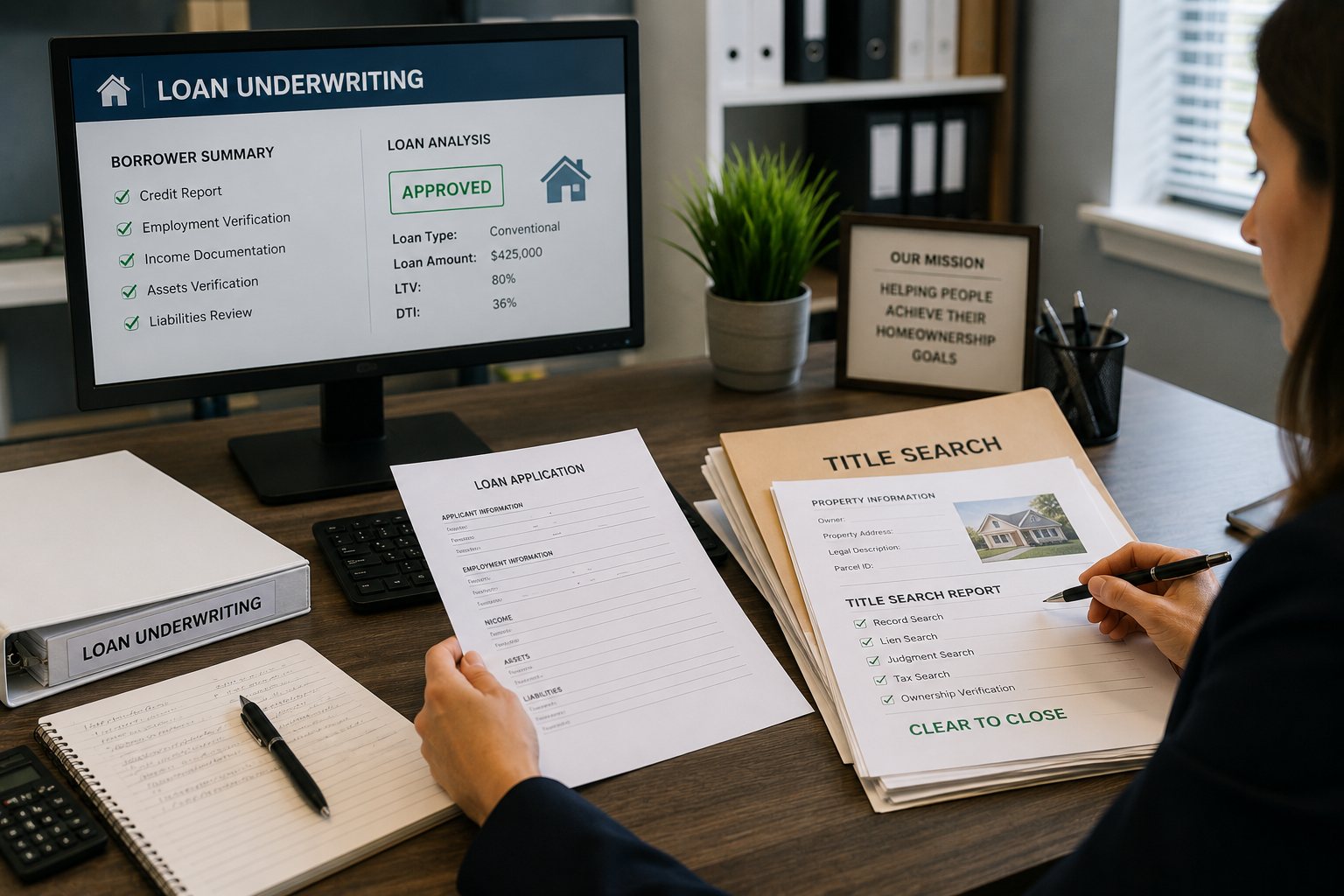
Loan underwriting approval and title search review by mortgage processor
04

Loan Underwriting & Title Search

The lender verifies your finances while the title company confirms the seller has clean legal ownership to transfer.

  • Submit all lender documents promptly — delays are common here
  • Title search checks for liens, unpaid taxes, ownership disputes
  • Title insurance protects you from future claims
  • Avoid any financial changes during underwriting
Final walkthrough — buyer and agent inspecting the home before closing
05

Final Walkthrough

Typically 24–48 hours before closing, you conduct a final walkthrough of the property.

  • Confirm agreed repairs were completed
  • Verify condition matches the contract
  • Confirm seller has vacated and removed belongings
  • Test appliances, lights, plumbing, and doors
Closing day — buyers and sellers signing documents with attorney at law office
06

Closing Day 🎉

The final step. Documents are signed, funds are transferred, and you officially become a homeowner.

  • Bring: government-issued ID, cashier’s check or wire confirmation, proof of homeowners insurance
  • Review and sign the Closing Disclosure, mortgage note, deed documents
  • Funds transfer and deed is recorded
  • Keys are yours — welcome home!
💡 You typically receive your Closing Disclosure at least 3 business days before signing — review it carefully.

Seller Closing Step by Step

Once you accept an offer, the home enters the “under contract” phase. Here is exactly what happens on your side of the transaction — and what to expect from the buyer.

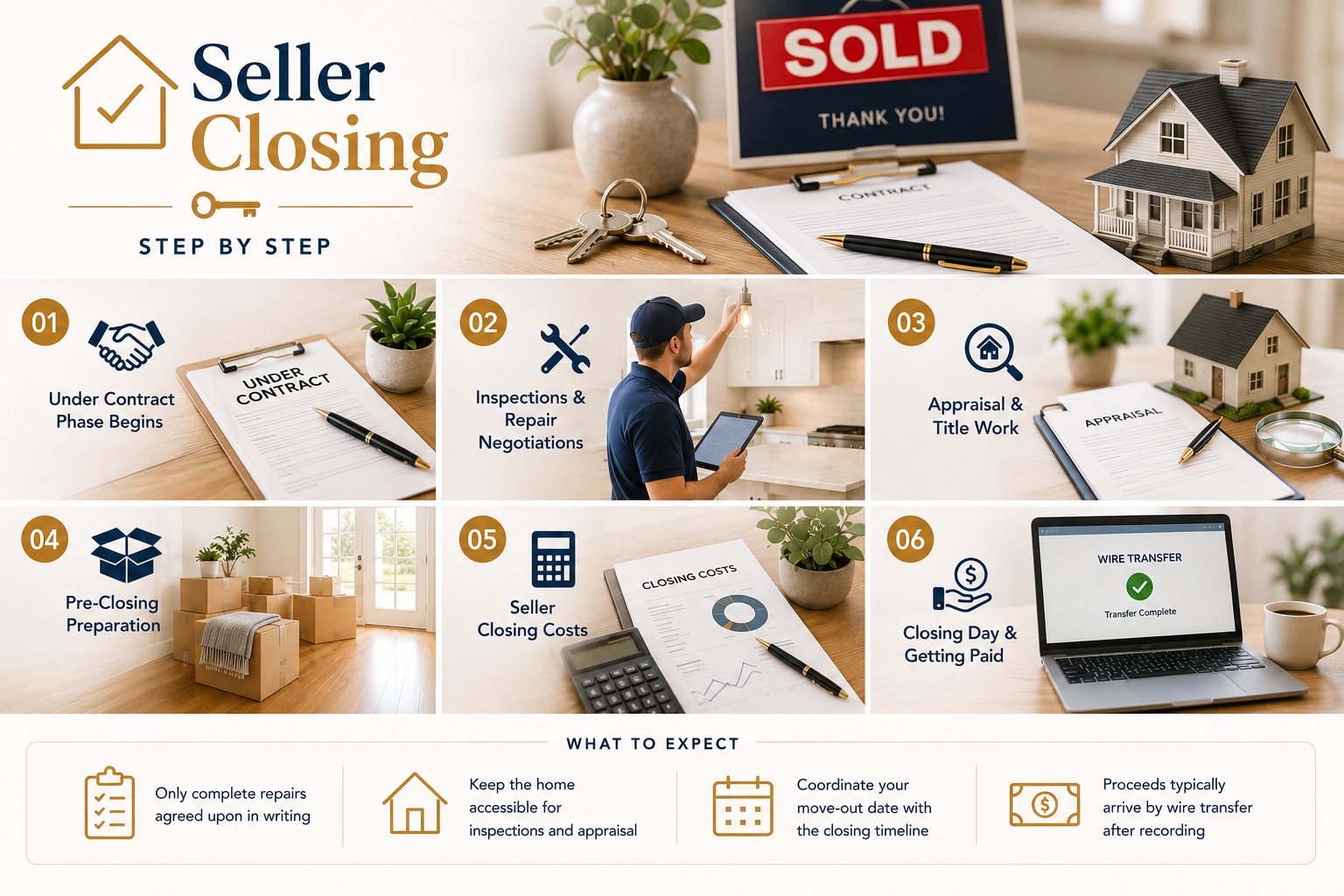
Seller Closing Process — Step by step from contract to proceeds

From Accepted Offer to Proceeds in Hand

As a seller, much of the closing process is driven by the buyer — but there are key responsibilities on your side. Staying organized and communicating with your agent prevents delays and protects your net proceeds.

Only complete repairs agreed upon in writing
Keep the home accessible for inspections and appraisal
Coordinate your move-out date with the closing timeline
Proceeds typically arrive by wire transfer after recording
Under contract — Whispering Heights Group yard sign in front of luxury home
01

Under Contract Phase Begins

Once you accept the offer, the home is marked “under contract.” The buyer begins their due diligence.

  • Buyer deposits earnest money within 1–3 days
  • Inspections are typically scheduled within the first 10 days
  • Your agent monitors all deadlines and contingencies
Home inspector evaluating HVAC system during seller inspection period
02

Inspections & Repair Negotiations

The buyer will conduct inspections and may request repairs, credits, or a price reduction based on findings.

  • You are only obligated to complete repairs agreed upon in writing
  • You may offer a closing cost credit instead of doing repairs
  • Negotiations should be handled promptly to keep closing on track
💡 Your agent will help you evaluate requests and negotiate the best outcome.
Licensed appraiser evaluating home value for buyer's lender
03

Appraisal & Title Work

The buyer’s lender orders an appraisal and the title company begins its search to confirm clear ownership.

  • If the home appraises low, you may need to renegotiate the price
  • Title search may uncover liens or issues you need to resolve
  • Keep property accessible for the appraiser’s visit
Moving truck loaded with boxes outside seller's home during pre-closing preparation
04

Pre-Closing Preparation

As closing approaches, prepare the home and finalize your moving plans so everything goes smoothly on closing day.

  • Complete all agreed-upon repairs before the final walkthrough
  • Coordinate your move-out date with possession terms
  • Leave keys, remotes, appliance manuals, and HOA information
  • Confirm utility shutoff or transfer dates
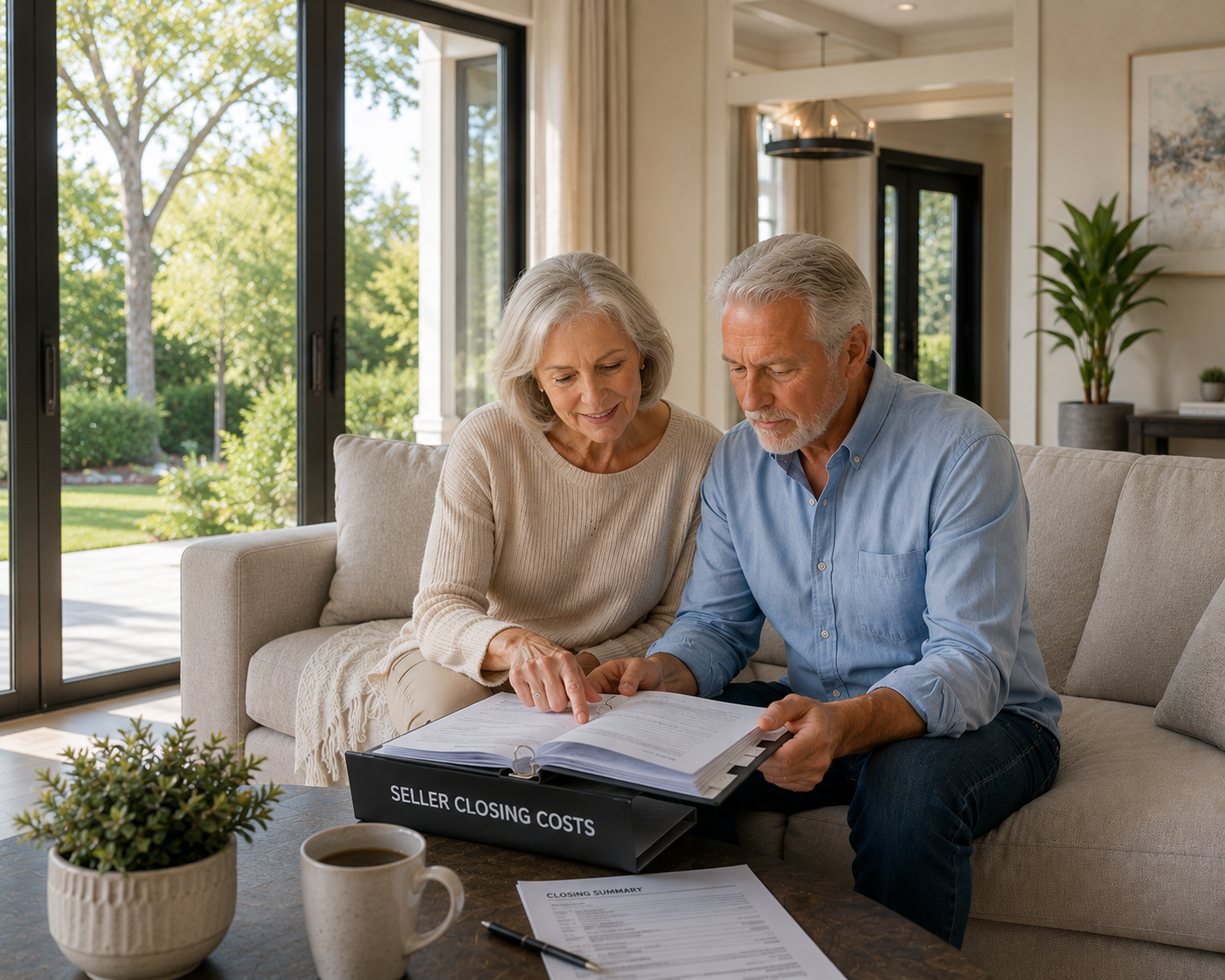
Sellers reviewing closing cost summary and seller closing costs binder at home
05

Seller Closing Costs

Sellers have their own set of closing costs deducted from proceeds at closing.

  • Agent commissions (typically split between buyer and seller agents)
  • Attorney or title fees
  • Transfer taxes and prorated property taxes
  • Mortgage payoff balance
  • HOA fees or seller-negotiated concessions
💡 Your agent will provide a net proceeds estimate so you know exactly what to expect.
Closing day — buyers, sellers, and attorney signing final documents at law office
06

Closing Day & Getting Paid

On closing day, documents are signed, the deed is recorded, and you receive your proceeds.

  • Sellers may pre-sign documents or use power of attorney if needed
  • The deed is officially transferred and recorded with the county
  • Proceeds are typically wired to your account after recording
  • Ownership changes hands — congratulations on a successful sale!

Closing FAQ

Select your role below for answers specific to your situation.

Most home purchases close within 30–45 days after the offer is accepted, although timelines can vary depending on financing, inspections, appraisal, and title work.
Typical next steps include:
  • Earnest money deposit
  • Home inspection
  • Appraisal
  • Loan underwriting
  • Title search
  • Final walkthrough
  • Signing closing documents
Buyer closing costs are usually around 2%–5% of the loan amount and may include:
  • Loan origination fees
  • Appraisal fee
  • Title insurance
  • Escrow fees
  • Prepaid taxes and homeowners insurance
Earnest money is a good-faith deposit showing the seller you’re serious about purchasing the home. It is typically applied toward your down payment or closing costs at closing, and is held in an escrow account until closing.
A home inspection evaluates the overall condition of the property. Common inspections include:
  • General home inspection
  • Roof, HVAC, plumbing, and electrical inspections
  • Structural inspection
  • Optional: radon, mold, sewer line, pest, pool, septic
Buyers may choose additional specialized inspections for peace of mind based on the property type and age.
An appraisal is ordered by the lender to confirm the home’s market value supports the loan amount. If the appraisal comes in lower than the purchase price, you may renegotiate the price, pay the difference out of pocket, challenge the appraisal, or cancel the contract if your contingency allows.
To protect your loan approval, avoid:
  • Opening new credit cards or loans
  • Financing furniture or vehicles
  • Large unexplained bank transfers
  • Changing or quitting your job
  • Missing any payment due dates
Lenders typically re-verify your financial situation within days of closing.
A title search verifies that the seller legally owns the property and has the right to sell it. It checks for:
  • Existing liens or unpaid debts on the property
  • Ownership disputes or missing heirs
  • Unpaid property taxes
  • Legal claims against the property
Title insurance protects you against future claims that were not discovered during the search.
A Seller’s Disclosure is a legal document completed by the seller listing any known defects or issues with the property. It may cover:
  • Roof leaks or past water damage
  • Plumbing, electrical, or HVAC problems
  • Foundation or structural concerns
  • Mold, pests, or environmental hazards
  • Past insurance claims or repairs
  • Lead-based paint disclosures (for older homes)
The final walkthrough is typically conducted 24–48 hours before closing. It lets you confirm:
  • Agreed repairs were completed satisfactorily
  • Property condition matches what was in the contract
  • The seller has moved out and removed all belongings
  • No new or unexpected damage has occurred
Common closing documents include:
  • Closing Disclosure (review 3+ days before signing)
  • Promissory note (your mortgage agreement)
  • Deed of Trust or Mortgage
  • Right of Rescission (for refinances)
  • Transfer tax and title documents
Typically you will need:
  • Government-issued photo ID
  • Proof of homeowners insurance
  • Cashier’s check or wire transfer confirmation for closing funds
  • Any additional lender-requested documents
Buyers typically receive the keys immediately after closing is completed, documents are signed, and funds are transferred and confirmed. This usually happens the same day as the closing appointment — congratulations!
The home enters the “under contract” phase. The buyer begins inspections, financing approval, title work, and appraisal. Your agent monitors all deadlines and keeps the process on track toward closing.
Most closings occur within 30–60 days from the accepted offer, depending on the buyer’s financing, inspection negotiations, appraisal, and title work. Cash sales can close much faster — sometimes in as little as 10–14 days.
Seller closing costs commonly include:
  • Real estate agent commissions
  • Attorney or title company fees
  • Transfer taxes and prorated property taxes
  • Remaining mortgage payoff balance
  • HOA fees or transfer fees
  • Any seller-negotiated concessions
Your agent will provide a net sheet so you know your estimated proceeds ahead of time.
Yes — buyers may terminate the contract under active contingencies such as inspection, financing, or appraisal. Contract terms determine whether the earnest money is refunded or forfeited. Once all contingencies are removed, the buyer’s commitment is much stronger.
Only repairs that were explicitly agreed upon in writing during the inspection negotiation period are typically required. You are not obligated to complete repairs the buyer requests if they were not included in a signed amendment or addendum.
Common causes of closing delays include:
  • Financing issues or lender conditions
  • Low appraisal requiring renegotiation
  • Title problems such as liens or ownership disputes
  • Unresolved inspection negotiations
  • Missing paperwork from buyer, seller, or lender
Your agent will proactively manage timelines to minimize delays.
Not always. In many states, sellers can pre-sign documents before closing day, use a mobile notary, or designate a power of attorney if they are unable to attend in person. Your agent and title company will confirm what is required in your state.
Typically sellers leave:
  • All sets of house keys and garage door remotes
  • Mailbox keys and any community access keys or fobs
  • Appliance manuals and warranty documentation
  • HOA information, rules, and contact details
  • Any items specifically included in the contract
Your contract will specify the possession terms. Most sellers vacate the property before or on closing day. If you need extra time after closing, a temporary occupancy agreement (post-closing possession agreement) can be negotiated with the buyer before the contract is finalized.
Sellers typically receive their net proceeds by wire transfer on closing day, shortly after the deed is recorded with the county and the transaction is officially complete. In some states, recording happens same-day; in others it may take 24–48 hours.
The Closing Disclosure is a document provided to the buyer at least 3 business days before closing. It summarizes the final loan terms, closing costs, credits, and the seller’s net proceeds. As the seller, your title company or agent will provide a settlement statement showing your proceeds breakdown.
On closing day:
  • Final documents are signed by buyer and/or seller
  • Buyer’s funds are transferred to the escrow account
  • The deed is officially recorded with the county
  • Ownership transfers to the buyer
  • Your net proceeds are wired to your account
Congratulations — your home is officially sold!
We Guide You Every Step

Questions About Your Closing?

Talk to Our Team →

Let's Start Your Journey

Ready to buy, sell, or simply explore your options? We'd love to hear from you. Schedule a free, no-obligation consultation today.

🕐
Hours
Mon–Fri: 9am–6pm  |  Sat: 10am–4pm

📋 By submitting this form, you agree to be contacted by Whispering Heights Group | eXp Realty regarding your real estate inquiry. You may opt out at any time by contacting us directly.